

Have you ever eaten a meal and, just 1–2 hours later, felt hungry again, craved something sweet, or reached for a “little something”?
Often, the first thoughts are: “I have no willpower,” “I eat too much,” or “I must be doing something wrong.” In reality, the feeling of satiety is influenced by many factors: meal composition, protein amount, fiber, carbohydrates, fats, meal timing, sleep, stress, and even the way you eat.
Satiety is not just about a “full stomach.” It is a combination of volume, nutrients, digestion, hormonal signals, and stable energy levels throughout the day.
What Is Satiety?
Satiety is the comfortable feeling of fullness after a meal that keeps you from wanting to eat again very soon.
A filling meal doesn’t have to be a large one. It can be moderate in volume but well built nutritionally.
The difference between “I ate something” and “I am truly satisfied” often comes down to the quality of what is on your plate.
Why Don’t Some Meals Keep You Full?
Some meals provide quick energy but not lasting fullness. For example, a meal made mostly of refined carbohydrates, with little or no protein and fiber, can cause a rapid rise in blood sugar followed by a sharper energy drop.
This can show up as:
- hunger shortly after eating;
- sweet cravings;
- repeated snacking;
- afternoon fatigue;
- the feeling that “nothing fills me up.”
Carbohydrates are not the problem in themselves. The problem is the lack of balance in the meal.
Protein: The Foundation of a Filling Meal
Protein plays an important role in maintaining satiety. It slows digestion, supports muscle mass, and contributes to better nutritional intake throughout the day.
Useful protein sources include:
- eggs;
- Greek yogurt, cottage cheese, kefir;
- lean chicken, turkey, beef;
- fish and seafood;
- tofu, tempeh;
- lentils, chickpeas, beans;
- low-fat cheeses in moderate amounts.
A common mistake is to eat protein only at lunch or dinner, while breakfast is mostly sweet or nutritionally poor. For many people, including a protein source at every main meal can significantly reduce later hunger.
Fiber: Volume That Supports Digestion and Appetite Control
Fiber is a type of indigestible carbohydrate that supports satiety, bowel regularity, and metabolic balance. It is found in vegetables, fruits, legumes, whole grains, seeds, and nuts.
A high-fiber meal usually has more volume and is digested more slowly. This can help maintain the feeling of fullness.
Good sources of fiber:
- raw or cooked vegetables;
- whole fruits, not just juice;
- oats;
- whole-grain bread;
- quinoa, buckwheat, brown rice;
- lentils, chickpeas, beans;
- chia, flax, and hemp seeds.
However, fiber should be adapted to digestive tolerance. Some people feel great with large salads and legumes, while others may experience bloating or discomfort if fiber is increased too quickly.
Carbohydrates Shouldn’t Be Eliminated — Just Portioned and Combined Well
Carbohydrates are an important source of energy. The problem arises when they are eaten alone, in large amounts, or without protein, fiber, and quality fats.
A balanced plate can include carbohydrates such as:
- potatoes;
- sweet potatoes;
- rice;
- whole-grain pasta;
- quinoa;
- whole-grain bread;
- oats;
- legumes;
- fruits.
When carbohydrates are combined with protein, fiber, and a small amount of healthy fat, the meal becomes more balanced and more satisfying.
For example, plain pasta with sauce is one thing. Whole-grain pasta with chicken, spinach, a light yogurt sauce, and a side salad is another. The difference is not just calories — it is structure.
Fats Help, but Quantity Matters
Fats slow stomach emptying and can contribute to satiety. They are also important for absorbing certain vitamins and for the taste of a meal.
Useful sources:
- olive oil;
- avocado;
- nuts and seeds;
- fatty fish;
- olives;
- moderate amounts of dairy;
- eggs.
Still, fats are calorie-dense. A small amount can provide a lot of energy. That is why, in a balanced eating plan, fats are not eliminated but portioned.
What Does a More Filling Meal Look Like?
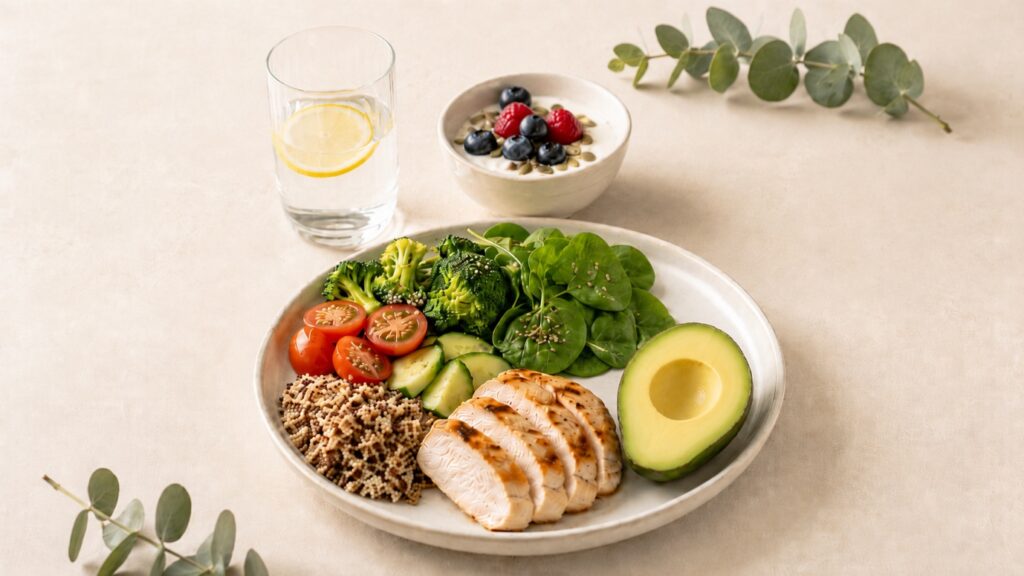
A satisfying meal usually has four components:
1. Protein
Examples: eggs, fish, chicken, Greek yogurt, cottage cheese, tofu, lentils.
2. Vegetables or Fruits
For volume, fiber, vitamins, and minerals.
3. Portioned Carbohydrate
Examples: potato, rice, whole-grain bread, oats, whole-grain pasta, quinoa.
4. Quality Fat in Moderate Amount
Examples: olive oil, avocado, seeds, nuts.
A simple example:
- eggs + whole-grain bread + tomatoes + avocado.
Another example:
- chicken breast + sweet potato + cabbage salad + olive oil.
Another example:
- Greek yogurt + berries + oats + chia seeds.
These are not complicated combinations. They are simple meals built with logic.
Why Do You Feel Hungry in the Evening?
Intense evening hunger often happens when the first part of the day was nutritionally too light. Maybe you only had coffee in the morning, grabbed a quick lunch, and then arrived home with hunger that is hard to control.
In these situations, the problem is not just dinner. The problem is the whole day.
If you skip meals or eat too little, your body will ask for energy later. That is why a minimal daily structure can reduce episodes of exaggerated evening hunger.
Sleep and Stress Influence Appetite
Satiety doesn’t depend only on what’s on the plate. Too little sleep and stress can influence appetite, sweet cravings, and food choices.
When you are tired, your body looks for quick energy. That is why cravings for sweet, salty, or very calorie-dense foods can appear more often.
During such periods, the solution is not to punish yourself with harsher restrictions, but to simplify meals and keep a few basic anchors: protein, vegetables, hydration, and regular meals.
What Can You Do Practically Starting Tomorrow?
You don’t have to change everything at once. Start with simple steps:
- add a protein source to every main meal;
- include vegetables at lunch and dinner;
- don’t cut out carbohydrates completely — just portion them;
- use quality fats, but in moderate amounts;
- avoid reaching the evening extremely hungry;
- prepare a few simple, repeatable options;
- eat more slowly and notice your body’s real satiety signals.
Satiety is built. It doesn’t come from a single “miracle” food, but from the right combinations and consistency.
Conclusion
Feeling hungry soon after a meal doesn’t automatically mean you lack willpower. Often, it means the meal wasn’t balanced enough.
A way of eating that supports satiety needs protein, fiber, portioned carbohydrates, quality fats, and a minimal structure throughout the day.
You don’t need perfection. You need smarter meals that you can repeat in real life.
Note: This article is for educational purposes and does not replace individualized medical or nutritional advice. If you have medical conditions, are undergoing treatment, or have specific dietary needs, it is recommended to seek personalized guidance from a doctor and a licensed nutritionist-dietitian.