

Important: This article is for information and educational purposes only. It does not recommend or prescribe medication and is not a substitute for medical advice. Do not change your dose or stop treatment without speaking to the doctor who prescribed it.
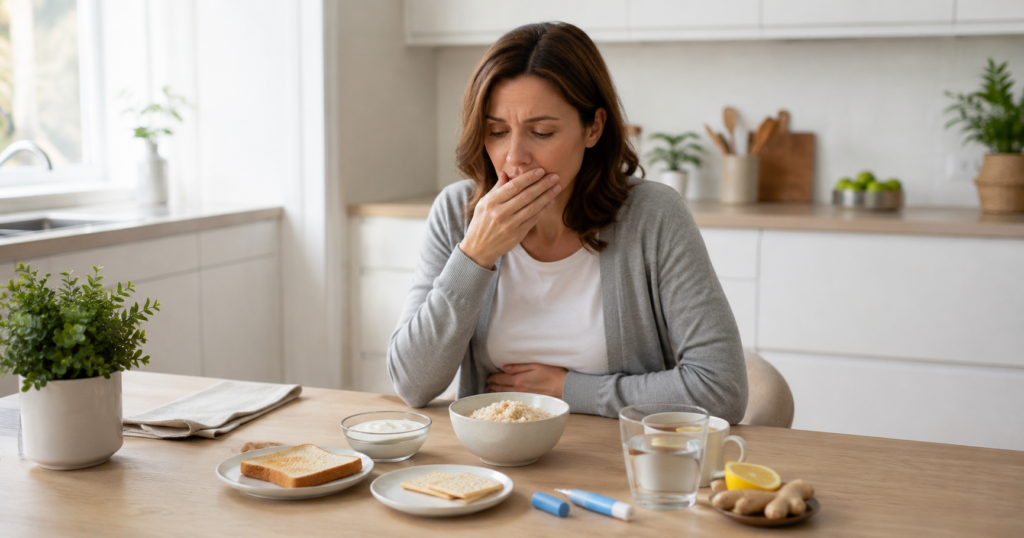
GLP-1 nausea can occur particularly when treatment is first started or after the dose is increased. Sometimes it feels like mild discomfort; at other times, the smell of food or even the sight of a normal portion can become difficult to tolerate.
You do not need to force yourself to eat a large meal. On more difficult days, the aim is to choose small portions, simple foods and fluids taken gradually, while not ignoring symptoms that are persistent or severe.
Why can GLP-1 nausea occur?
Semaglutide, the active ingredient in Ozempic and Wegovy, and tirzepatide, the active ingredient in Mounjaro, can affect appetite and stomach emptying. Nausea, vomiting and other digestive symptoms are listed among the common adverse effects in the official product information. [1-3]
Symptoms may be more noticeable when treatment begins, after a dose increase, following a large meal or after eating very fatty foods. However, nausea can have other causes, and persistent symptoms should not automatically be attributed to the injection.
What to eat when you feel nauseous
Start with small portions
A full plate may feel difficult to tolerate before you have even started eating. Serve a small amount first, eat slowly and stop when you begin to feel full.
You can return to the remaining food later. It is often easier to manage several small portions than to force down one large meal. Specialist recommendations for managing digestive symptoms associated with GLP-1 therapies include smaller portions, slow eating and stopping when satiety appears. [4]
Choose simple, lower-fat foods
On days when you feel nauseous, the following foods may be easier to tolerate:
- well-cooked rice, potatoes or oats;
- toast or plain crackers;
- chicken soup or a simple blended soup;
- white fish;
- lean chicken or turkey;
- an egg prepared with very little oil;
- plain yoghurt or fresh cheese, if dairy products are tolerated;
- a banana or other non-acidic fruit, in moderate amounts.
No single food is guaranteed to stop nausea. Choose the texture, temperature and smell that you can tolerate on that particular day.
Try cold or room-temperature foods
Hot food releases stronger smells, which can make nausea worse. Some people tolerate yoghurt, cottage cheese, overnight oats, a simple sandwich or other cold foods more easily.
If you choose a smoothie, drink it slowly. A large volume consumed quickly may increase the feeling of fullness.
Sip fluids slowly
Drinking a large amount of water at once may be difficult to tolerate. Try small, repeated sips throughout the day.
If drinking during meals increases fullness, have more of your fluids between meals. Water, unsweetened tea and simple soups can all contribute to hydration.
What can make nausea worse?
Notice whether your symptoms repeatedly appear after:
- fried foods and very fatty meals;
- large portions;
- heavy sauces;
- very spicy food;
- foods with strong smells;
- alcohol;
- fizzy drinks;
- very sweet desserts;
- eating very quickly or having late meals.
You do not need to remove all of these foods in advance. Tolerance varies from person to person. A simple diary recording meal times, foods eaten and symptom intensity may make it easier to identify what affects you.
What to do when you can only manage a few bites
On days when GLP-1 nausea is more intense, the aim is not to finish your usual portion, but to choose a few foods you can tolerate.
Try combining a small amount of protein with a simple food:
- yoghurt with a small amount of oats;
- an egg with toast;
- fresh cheese with crackers;
- white fish with a small amount of rice;
- chicken soup with a small amount of potato.
Including protein can be useful, but do not turn the “protein first” principle into an obligation. If a protein-rich food makes the nausea worse, start with what you can tolerate and return to protein later.
How a structured meal plan can help
When your tolerance changes from one day to the next, choosing foods and portion sizes can become tiring. Metabolic Reset Premium includes a 14-day menu, recipes with precise quantities, guidance for days with a reduced appetite and a Swap List for foods that are not well tolerated.
The plan does not treat nausea, and not every meal will automatically be suitable during an episode. Ingredients such as onion, garlic, seeds, acidic foods or higher-fat meals may need to be replaced according to individual tolerance.
Constipation during GLP-1 treatment
Acid reflux during GLP-1 treatment
When to contact your doctor
Speak to your doctor if the nausea:
- persists or becomes worse;
- has become more intense after a dose increase;
- prevents you from eating enough;
- is accompanied by repeated vomiting;
- makes it impossible to keep fluids down;
- is associated with dizziness, marked weakness or very dark urine.
Seek prompt medical assessment if you develop severe and persistent abdominal pain, particularly if it spreads to your back, vomiting blood, black stools, fainting or confusion. Do not change your dose on your own, and do not take anti-nausea medication without speaking to your doctor or pharmacist.
Small portions and easier-to-tolerate choices
GLP-1 nausea may be easier to manage when you reduce portion sizes, eat slowly and choose simple meals.
Nausea does not mean that you need to stop eating altogether. Start with small amounts, eat slowly, temporarily limit very fatty meals and monitor which foods trigger your symptoms.
For a structured menu, recipes with precise quantities and alternatives that can be adapted on days with a reduced appetite, you can consult Metabolic Reset Premium.
Sources and bibliography
[1] European Medicines Agency. Wegovy – official product information, semaglutide.
[2] European Medicines Agency. Ozempic – official product information, semaglutide.
[3] European Medicines Agency. Mounjaro – official product information, tirzepatide.